Governor Mark Sanford continues in his attempts to win back the trust of the people of South Carolina. His latest attempt? An editorial written to "The State" (a newspaper out of South Carolina) in which he reaffirmed his faith in God and said that God will make him a better person. Of course, I'm no biblical scholar or even a church-goer but I fail to see how God could help you improve your own personal behavior. After all, He did give us all free will. And if Sanford was such a good Christian, he never would've been in this situation to begin with. "Thou shalt not commit adultery" is one of the ten commandments.
Hopefully the people of South Carolina will see that Sanford is just trying to use their religion to get back in their good graces. As much as I like writing about him, I just wish he'd go away.
I should do a whole blog post about religion, growing up in the South as a non-religious person has given me an interesting perspective on it. When I figure out how not to offend anyone by talking about religion, I'll do it.

July 20, 2009


July 19, 2009
Green... An Appropriate Subject, Right?
First of all, money isn't really green. Not if we're talking about the good old United States standard-issue dollar bill. It's more a kind of greenish grayish (and now, since the new bills came out, peachish) mixture that normally wouldn't look all that appealing, except for the numbers, curliques, watermarks, and patriotic propaganda that miraculously make it so.
Now,. that's a literal interpretation. But the thing about money is that it isn't green figuratively, either. I mean, look around- we're still (kind of, not really, but let's say so for dramatic effect) the richest country in the world, and how many chlorofluorocarbons do we have floating around our atmosphere?
I won't go into the tirade that goes on and on and on about how we could recycle more. Or about how we could try manufacturing cars with stricter emission standards. Or even about how we could just plain be a little more careful about life in general and we'd save our grandchildren from having to clean up quite so much of our mess. No, I won't go into that.
All I'll say, quite truthfully, is that we at Dartmouth are all about green, right? An alumna speaking at the Dartmouth Club of Long Island dinner a few weeks ago unraveled a rather graphic description of just how green every student's blood is. And she seems to be correct.
So, apart from the going-green programs I'm sure we all participate in- apart from the work organizations have done helping the world to go green, maybe we can each do something to make ourselves just a little greener...
July 18, 2009
Remembering Walter Cronkite
 I'd like to say a few words about the late broadcasting legend, Walter Cronkite. I should first note that the title of my post is ironic as Cronkite has been retired from news anchoring for the entirety of my lifetime. But even so, I can clearly understand the affection people have for Cronkite and why contemporary opinion polls labeled him "the most trusted man in America". For Americans of an older generation, Cronkite's reputation was earned by two decades of authoritative news-casting, his affable demeanor, and his tremendous journalistic ethics. In remembering him, many have looked back to the historical moments he brought to the lives of Americans by virtue of his position. Chief among these is the Kennedy assassination.
Pundits have argued that Cronkite's greatness was in the emotion of his voice during that broadcast -- the pain of a common man forced to tell his country of the murder of its president -- choking back his own sadness to fulfill his journalistic duty. And while that is certainly true, that broadcast in particular was remarkable for what he did not say.
He did not embellish the truth. He did not plaster the story with adjectives. He did not call it tragic, even though it was. He did not insert his own commentary. Even in this apocalyptic moment, in the pit of his own despair, and in the darkness of a nation's uncertain future, Walter Cronkite simply read the news and left its meaning up to our interpretation.
He was the conduit between Americans and the world around them. He was the friendly man on the screen in the living room box. He was the last of his kind. He will be sorely missed.
And that's the way it is.
Bipartisanship, Or an Oh-So-New-and-Fresh Idea
Ah, bipartisanship... You're a castle in the air. But why? Why can't we all just put aside our differences- or at least pretend to put them aside, for the common good? Why must we scream at each other instead of saving our energy to end all of those wars, or cure AIDS, or work on the new healthcare reforms (all of which, incidentally, could use our energy)?
Well, there are some relatively credible reasons for our reluctance to cooperate with each other. Think certain life-and-death issues and the lack of certain basic Declaration-of-Independence freedoms. The Republicans believe that the Democrats are stealing all of the Republicans' money and robbing red-blooded entrepreneur-capitalists of their rightful gains. The Democrats believe that the Republicans are oppressing kindergardeners with anti-evolution propaganda and denying practically everyone (including gays, lesbians, minorities, women, and anyone not earning over $250,000 a year) their basic rights.
Some of this may be true.
However, there are also a lot of rather less impressive reasons behind the fierce face-offs between Democrats and Republicans. Take the I-can-lecture-longer-at-dinner-parties reason, or the I-want-my-extra-bonus-even-though-I'm-hiding-most-of-my-money-in-a-Swiss-bank-account-and-avoiding-tax-evasion-charges reason (there's irony). Then there's the ever-impressive my-friend-said-so, or the hey-George-Bush-is-cute (I've heard that one), or the good old just-because.
And when we're yelling at each other for these amazingly intelligent reasons, it's time to rethink a few things. Straighten out our priorities. After all, President Lincoln was (supposedly) a Republican, and he freed (some of) the slaves (talk about making the liberals happy). And President Franklin Delanor Roosevelt was (supposedly) a Democrat, and he imprisoned thousands of Japanese Americans during World War Two (talk about making the conservatives happy- and violating basic human rights, but that's a different story).
So, really, aren't we all the same? Shouldn't we all just come together and celebrate our status as (ex?)imperialistic bipartisan capitalist aristocrats?
Well, no... I'm more of a realist than to expect that. But the starving and dying and miserable people of America and of the world would really appreciate it if we could put our differences (at least the silly ones) aside and work together to do something useful, like ending war and poverty. Sound good?
Let's try it.
July 17, 2009

Quick! Breaking News
In case you were all wondering, apparently Sarah Palin is still out there in the political scene. I know, right? I find it hard to believe, too... But these people are pretty serious. Check out this link:
http://www.palin4pres2012.com/
--Complete with descriptions of McCain's plots to overthrow Sarah Palin (I guess he resents the fact that she sunk his ship in the latest presidential election- her people don't seem too crazy about him either) and tidbits about the latest Democratic designs to steal all of your money.
Oh, and the sidebar advertisement showing a T-shirt depicting Obama with Mickey Mouse ears? I thought that was very mature.
A Blast from the past.
Al Franken on the Judiciary Committee before he was elected to the Senate. Phil Hartman does a spectacular Ted Kennedy.
A false sense of security.
My TV has been bombarding me with commercials for Brinks (now "Broadview") security systems, which is great because I wasn't feeling insecure enough without the TV reminding me what a danger strange, scary men are.
 In case you haven't seen the spot it goes something like this: Kind-looking white lady returns into her house and immediately arms her home alarm system. Scary-looking, darker-skinned, and not recently shaven man breaks down door and menaces at woman, who promptly screams and retreats into her house. Cue: brinks alarm. Scary man runs away, phone rings, and Brinks sends in the cavalry.
 This ad is kind of like an impressionist painting: it appears cogent when looked at quickly and from far away but a closer inspection reveals that the details are blurry. First, thieves spend a lot of time casing out their targets and know to strike during the day when suspicion is at its lowest. They will likely not kick down doors, instead opting to pick locks, disabling the systems, cutting phone and power lines, or gain entry through open windows and side doors. They will be after specific targets like cash, jewelry, and electronics and will make quick work of collecting them. Before the police are even dispatched, they will probably be long gone. Second, alarms are largely over rated. How many time have you heard a car alarm go off and not called the police? My guess is about every time. Professional thieves are likely not afraid of loud noises and will simply continue with their plan as quickly as possible. Three, only the most paranoid home owner would turn on their security system the moment they entered their house, instead choosing more likely to leave it off while home and on only during periods of extended absence. Third, in cases of malice towards the individuals of the house, a security alarm would be totally ineffective. One spot shows an ex-lover breaking into a woman's home, being scared away by Brinks's assuring siren. In that kind of case, the ex-lover would probably know about the alarm in advance (probably even how to disarm it) and would still have the time to harm, kill, or kidnap the victim before Brinks even calls. And last, the mere ownership of a security system gives home owners a false sense of confidence that will likely cause them to be more reckless in other areas of basic property protection.
Most would-be criminals would likely be deterred by the security sign posted out front, and those who aren't are going to be a lot more resilient again Brinks's loud noises and response phone calls. My advice, build a sturdier home. You won't need Brinks if it is physically impossible for a criminal to break-in in the first place.
The Hypocrite of South Carolina

"I reckon he's a hypocrite," the Democrat [State Senator Minority Leader John Land] said. "He goes before the Christian right and professes to be one thing and yet his conduct is something else. He goes before the people of the state and talks about his fiscal conservatism. But yet when you see him in action, he's going first class and spending the state taxpayers' money."
That quote sums up the entire Mark Sanford debacle pretty well. Over the last month, we have seen Sanford slowly exposed as a lying hypocrite who cheated on his wife and used taxpayer money to fly lavishly while admonishing other state officials for their spending habits. In all, Sanford spent $37,600 of taxpayer's money for his trips in which he flew first and business class while his staffers flew coach for a fraction of the cost.
Remember when Sanford said that the stimulus was an inefficient use of taxpayer's money? I guess paying for his trips was a better use of it. After all, who doesn't want to pay for their governor to travel abroad in style? For a man who took pride in his frugality and even once bragged about sleeping in a cot to save money, this seems out of character. Par the course for a hypocrite like Mark Sanford.
As for the details of his travels, he hasn't exactly been forthcoming with details regarding his trips to Argentina. His staff is only releasing emails from his state account and in many of these released emails, he directs people to email him at his Comcast account. Hopefully, the state can subpoena the Comcast account as part of their investigation into his spending habits.
All in all, Sanford has only reimbursed the state for $3,300 of his travel expenses. Hopefully the State of South Carolina can get some more of that money back so they can use it to benefit its citizens and not their hypocritical governor.
Selective Memory and Texas Hold'em
Selective memory seems to be increasingly popular these days. Like Facebook stalking, it began its career masquerading as a social faux pas and has now become a large part of the lives of the most sophisticated, intelligent, Hamilton-beloved people on the planet- the citizens of the United States of America.
It's a shock to discover that that illustrious body has fallen so far. Imagine! A world in which the American public debates the relative merits and negative attributes of an Alaskan governor's haircut and forgets- oops!- some silly things that used to be important, such as a few wars with rising death tolls and the impending threat of nuclear devastation.
Well, guess what, folks? Look around and you'll see that that description's not far from the mark. The plague of selective memory is here- and seems to have taken over the whole known world (or at least the whole known world with the time to cruise the Internet searching for free samples of Cialis).
This wouldn't be quite so shocking if I wasn't quite aware that every red-blooded, patriotic American knows the cardinal rule of any good card game. Never forget the cards you've seen- and most of all, never forget the cards you're playing.
Take Texas hold'em. Five cards out on the table for all to see. In this case those would be Afghanistan, Iraq, North Korea, Iran, and for a hoot let's throw in the complete wreck of a job this country does feeding and educating its poor. Shouldn't our fine-historied citizens be able to remember those five simple things? Especially when they're right in front of their faces? (A neighbor's son who just died in Afghanistan. A second cousin who joined the National Guard and ended up in Iraq...)
But they don't. We don't. And I sure wish we were only playing Texas hold'em for marbles because as is, we're playing with our lives and the welfare of our country and of the world. And it looks like we're losing, because we keep forgetting which cards are on the table.
Time to step it up, America.
July 16, 2009
"ConDENscending"- Boxer dukes it out
Quite a tense video. Mr. Harry C. Alford of the Black Chamber of Commerce charges Senator Boxer (D-CA) with racism for quoting another black community leader, but, in doing so, he reveals his own prejudice in thinking that Boxer (and presumably any other white senator) would only have a black witness testify as a token for his or her race. Sergeant Race Card plays an ignoble act of false indignation and real desperation in his attempt to undermine criticism of his position and questionable expertise.
As much as the GOP is playing this up -- saying that Boxer was being condescending towards a black man -- Boxer came off pretty well. It's not like SGT. Race Card ma'am-ed her or anything...
Vittergate 2
 In addition to using my dry-cleaner, LGB has learned that Senator David Vitter (R-LA) also shares my grocer. Milano cookies, crest toothpaste, and Ben & Jerry's Heath Bar Crunch rounded out this big-shot's shopping. Someone's got a sweet tooth.
And yet again, despite the fact that I'm in there every single day, the kindly Asian lady who works the cash machine asked to see my ID.
Sounds like a wild after-party for the Senate Judiciary Committee
Your bizarre news for the day:
1. Iowa man smears poop on door, "defies the basic morals of the community."
2. New Hampshire man buys most expensive cigarettes in history of man-kind.
3. Bride's bouquet crashes plane in Italy. Bride and groom somehow not involved.
4. Joe Biden out-gaffed by Senator Jeff Session's cocaine habit.
1. Iowa man smears poop on door, "defies the basic morals of the community."
2. New Hampshire man buys most expensive cigarettes in history of man-kind.
3. Bride's bouquet crashes plane in Italy. Bride and groom somehow not involved.
4. Joe Biden out-gaffed by Senator Jeff Session's cocaine habit.
This Week on "The Governor and the Restless"...........
The Sanfords are going to Florida!
Governor Mark Sanford will be vacationing with his wife in Florida in an attempt to repair his marriage. An admirable idea but what would a Sanford vacation be without a little bit of irresponsibility? Before leaving, the Governor skipped a meeting with a key economic advisor that was scheduled to allow them to discuss the worsening economy. This meeting was pretty important because South Carolina's unemployment rate is 11.6% and not showing any signs of improvement.
Here's some advice, if you can't fully commit to the people of South Carolina, quit your job Governor and focus on your marriage. It seems like you're struggling with being a governor and a husband so pick one and stick with it.
Thought of the day.
After watching the first two days of the Sotomayor hearings and in preparation of its last day today, I am left with one clear thought: If I hear one more question about her "wise Latina" remark, I'm going to punch the dumb republican cracker who asks it.
July 15, 2009
Bang Bang Maxwell
 Well it looks like the constant police presence that surrounds my apartment on fortified Capitol Hill got a bit of action today. Within minutes of me leaving a Senate hearing (and spotting Vitter with his dry-cleaning), at 5PM U.S. Capitol Police shot and killed an armed motorist on the north (Senate) side of the Capitol. Sotomayor hearings briefly went into lock down.
Rural what now?

Rural economic development......
I came across an interesting article in BusinessWeek today that discussed former President (and Governor of Arkansas, a predominantly rural state) Bill Clinton's observation that little is done to help rural regions economically. I am actually doing an internship in a small town in a predominantly rural area in North Carolina and my observations have led to me to believe that Clinton is absolutely right in his view. The greatest poverty in America can be found in rural areas, where the labor force is often uneducated and unable to adapt to the rapid change from an industrial to a service economy. These people are often left unable to find work because of their lack of a formal education or if they can find work relegated to lower level service jobs that only pay minimum wage. After all, you can't work in an office if your highest level of education is 10th grade.
For many people it isn't economically feasible to return to school. After all, if you have a family to support working at Wal-Mart at least provides an income for your family. However, even 10 years ago, well-paying jobs would be relatively easy to come by. I know that my state (North Carolina) has been hard hit by the exodus of the textile industry, long a provider of well-paying jobs that require little education.
There are many jobs out there that could suit the needs of rural America. Clinton pointed out a basic means of creating jobs, investing in green energy. A solid investment in green energy requires almost an entire rebuilding of our energy infrastructure. Who better to do that than the predominantly blue collar labor force that exists in rural America?
We need to address poverty and unemployment in America. What better way to do it than to address the root of the problem? Will we continue our inadequate response to rural poverty? I hope not because like our former President said, to do so would be extremely ill-advised.
The stain that won't come out.
 Apparently I have the same dry-cleaner as Senator David Vitter (R-LA). I ran into him while picking up a suit and was surprised he (1) looked so old -- that scandal really took its toll -- and (2) didn't have some intern to pick up all those shirts for him.
Apparently my local guy is frequented by other big wigs. I'll keep my eyes out for you all.
The Governor and the Restless
Who doesn't like a good soap opera? Long a guilty pleasure for many people, soap operas provide a form of escapism. After all, nothing that happens in it is real and no one is actually hurt. Soap operas keep us on the edge of our seats with twist and turns. You never know what's going to happen next!
You know what my favorite soap opera is? The one that had the Governor who met a girl at a dance party in Uruguay and then had an affair with her. The twist is that it was no ordinary affair, the Governor had finally met the love of his life. He was conflicted, his political career would suffer if he came out publicly and divorced his wife so the Governor decided to keep it hidden by making secret trips to her homeland of Argentina to see her. The two star-crossed lovers knew that their affair shouldn't happen but they followed their hearts and found a way to let their blossoming love grow.
Of course as you all know, the above does not actually describe a soap opera but a reality for the people of South Carolina. The Governor mentioned is Mark Sanford and the events described actually happened. Of course, unlike an actual soap opera, people were actually hurt and Sanford's actions had consequences.
Sanford behaved incredibly irresponsibly in his quest to live a real life soap opera. He never ceded power to his Lt. Governor prior to leaving the country, he misled staffers into believing he was hiking the AT when he was actually in Argentina and he refused to respond to the attempts of his staffers to reach him. What if his staffers weren't just contacting him to check in? What if something major was happening in the state? Turning on the news wouldn't update him. After all, Governors probably deal with issues that we as citizens never find out about. Had an important issue gone unaddressed, it could have had dire consequences for South Carolina.
At times though, it seemed like Sanford was aware that all of this was unraveling like a bad soap opera storyline. He gave interviews calling his mistress the "love of his life" and said that he asked for permission to see her but was denied so he went to see her anyway. He said that he would try to fall back in love with his wife, a revelation that again sounds like something a character on "As The World Turns" would say and not the Governor of South Carolina. How do you "try" to fall back in love with someone?
Since Governor Sanford didn't actually break the law, impeachment efforts have proved futile and South Carolina Republicans have largely backed off any attempts to do so. South Carolina Democrats are still behind impeachment efforts but since Democrats in South Carolina are an endangered species, it really doesn't matter.
All we can do now is sit back and continue to watch "The Governor and the Restless."
July 14, 2009
Nunchuckery: Today in Politics
The Judiciary Committee discussed ninja weaponry...
...Sotomayor remembered some comment or other she made about Latinos and wisdom...
...Republicans also apparently nominated a Latino to be a federal judge, but he was rejected on the grounds of having "no judicial experience"...
... most republicans (and Americans) don't think Caribou Barbie is ready to be the Commander in Chief...
... a solider claims that he cannot be sent to war because Obama is not the President...
... and best of all -- this clip of must-see TV -- a CNBC anchor demonstrates extreme ignorance of law and science and general dickishness.
Oh, yeah....
What ever happened over there?

Mr. Ahmadinejad as Cookie Monster snacking on Mousavi's votes. (thanks to trendpiece)
Funny, I can't seem to remember what were talking about before Michael died....

Mr. Ahmadinejad as Cookie Monster snacking on Mousavi's votes. (thanks to trendpiece)
Funny, I can't seem to remember what were talking about before Michael died....
New York Harbor is filled with a lot of neat stuff.
Your bizarre news for the day:
1. Making scumbaggery a little greener: discounts to brothel patrons who arrive on bicycle.
3. The bottoms of New York City's harbors still house 1,600 bars of silver, if you can find them amid the junk and the 4-foot-long, wood-eating worms.
4. CLASSIC: The Rubber Room- Where naughty New York Teachers go to wait and die.
1. Making scumbaggery a little greener: discounts to brothel patrons who arrive on bicycle.
Customers who arrive on bicycle or who can prove they took public transportation get a 5-euro (4 pounds) discount from the usual 70-euro ($100) fee for 45 minute sessions, Goetz told Reuters. He said the environmentally friendly offer was working.2. Television advertisement showing Israeli Soldiers and Palestinians playing soccer over the West Bank barrier is "disturbing" because "in reality, if a Palestinian comes close to the fence to return a football ... he is likely to get shot."
3. The bottoms of New York City's harbors still house 1,600 bars of silver, if you can find them amid the junk and the 4-foot-long, wood-eating worms.
4. CLASSIC: The Rubber Room- Where naughty New York Teachers go to wait and die.
The room in question was about 1,100 square feet and on blueprints submitted to the Fire Department was designed to hold 26 people. On this day, it contained upward of 75. It had no windows, no land phone, no Internet access, no wall decorations, not even a clock. Any personal belongings left overnight were removed by custodians.
The Tuck Bridge to No Where
It looks like the Bridgers are not making friends in Hanover, but then again such is impossible if you insist on playing Beirut. From The Dartmouth...
We’ve all seen them around — the girls who wear handbags in frat basements, the guys who try to set up games of Beirut. They come into our social world, drink our alcohol, never say “thanks” or “sorry,” and are occasionally unruly. You know who I’m talking about — the Tuck Bridge kids. Keep Reading
July 13, 2009
From Our Honduran Correspondent...
 For the last decade our national attention in foreign policy has been scattered across the Eurasian Continent, but not trouble is brewing in our own backyard. At the moment, Honduras is in crisis. The military has ousted the elected president Manuel Zelaya, removed him from the country, and replaced him with the President of the National Congress Roberto Micheletti. The Organization of American States has suspended Honduras and the World Bank has halted all future loans to the country, leaving it in dire straits and its leadership uncertain.
President Obama and Secretary Clinton have vowed to support the ousted Zelaya and have declared the "coup" to be illegal. The role America plays in the affairs of the Western Hemisphere, ever since Mr. Monroe gave us dominion over it, is critical and any action we take now will have vast repercussions in events yet to unfold. To analyze the proper course of action, let's do a quick recap of what happened.

-In November 2008, Zelaya announces his intention to put a fourth box on the upcoming ballot allowing for the creation of a National Constituent Assembly to rewrite the constitution. While the wording of the proposition was vague, only 7 of the constitution's 375 articles cannot be modified by a constitutional majority. Because these 7 exceptions concern the limits of the terms and powers of the president, Zelaya's intentions are obvious.
- The Honduran Supreme Court found that the referendum was illegal because it would modify unmodifiable articles of the constitution. Romeo Vásquez Velásquez, chief of Honduran armed forces, followed the ruling and refused to aid Zelaya in distributing referendum materials (which were printed in Venezuela), so Zelaya fired him. The court found that firing unconstitutional as well.
- The Attorney General and the National Congress each concurred with the court that the referendum was illegal and in the lead-up to the referendum date, the National Congress, including Zelaya's own party therein, began to consider ways to impeach Zelaya.
- On 28 June 2009, the day of the referendum, after anti-Zelaya protesters marched on Tegucigalpa, the armed forces seized Zelaya and extradited him from the country. Zelaya's attempts to return to Honduras have been unsuccessful and mediation between Zelaya the newly installed President Micheletti by Costa Rican President Óscar Arias have been unsuccessful due to both sides' unwillingness to compromise.
For my work in Washington D.C., I attended the nomination hearings in the Senate Foreign Relations Committee for the U.S. Ambassadors to Brazil, Mexico, and Haiti and the Assistant Secretary of State for Western Hemisphere affairs. Honduras came up, and here are the transcripts (as best I could produce at the time).
Q13: Senator Jim DeMint (R-SC)
Returning to Honduras: some dictators use democracy to legitimize a power grab instead of bolstering democracy. The people of Honduras were concerned that a person would install themselves permanently in the presidency. Zelaya was trying to change the constitution to continue his term in office. Zelaya used mobs to distribute ballots created in Venezuela. Zelaya’s own party said his move was illegal. I have here the order from the supreme court of Honduras to arrest the ousted president. The military was ordered to do this by the unanimous opinion of the court. They followed the Constitution to prevent a president from destroying the constitution. Their constitution says that not only are presidents term limited, but if they attempt to extend their reign, they automatically resign.
A13: Arturo Valenzuela, Nominee for Assistant Secretary of State for Western Hemisphere affairs
As far as I know, the Honduran congress did not issue a declaration of unconstitutionality prior to Zelaya’s removal. The solution is not for the military to exile the president without charge; judicial processes should have been used. If a justice of the U.S. Supreme Court orders the U.S. President to be removed from the country by the military, that justice is breaking the constitution….
Q14: DeMint
…the congress voted almost unanimously, the court did vote unanimously, the attorney general issued charges, Zelaya’s party was in Washington to lobby against US supporting Zelaya. He resigned as soon as he attempted to extend his power. The military had to be used due to corruption of the police forces by Venezuela.
A14: Valenzuela
The disagreement is that the military used this option. The U.S. is not the only one to see the facts and say that it was illegal.
Demint (cutting in): Castro, Chavez, Ortega… all good friends of ours… (muted laughter)
Valenzuela: There was a unanimous declaration that a disruption occurred in the constitutional order. In my study of military coups, this is a textbook example of a coup, though I would not call it a coup because the military did not take power. I will call it a “disruption in the constitutional order.”
Q15: DeMint
There is no question that Zelaya was going to use the referendum to extend his term of office. Should we allow dictators to legitimize themselves?
A15: Valenzuela
We need to use constitutional means to protect democracy.
DeMint: But he was trying to change the constitution! And constitutionally he removed himself from office. When we find ourselves on the side of Ortega, Castro and Chavez, we need to reevaluate our position.
Needless to say, I don't agree much with Senator DeMint, but he seems to hit the nail right on the head here. I see five reasons why the U.S. should be more critical to Zelaya and supportive of the ouster:
- There is no realist U.S. interest in keeping an anti-U.S. leader in power in Honduras.
- It seems clear that in this extra-constitutional crisis, the constitutional order was followed as best the Honduran government could. Zelaya forced his own ouster.

- Regardless, what happens in Honduras is the Hondurans' business. The proper order might not be followed 100% of the time (when is it in America?), but that is certainly not grounds for U.S. intervention, especially when we consider how well intervention has worked elsewhere in the world.
- For the good of democracy in Latin America, we should not be complicit in allowing dictators to hijack democratic processes. Democracy is not about voting or majoritarianism, it is about the protection of civil rights with sovereignty vested in the people. If the democratic tradition in Latin America continues to be colored by such misconceptions, then it is doomed to continually produce similar results.
- Perhaps the biggest thing missed in this whole process is that Zelaya is wildly unpopular in Honduras. His party has abandoned him and his countrymen don't want him.

Obama needs to explain why he is so supportive of Zelaya, because there are plenty of reasons why he shouldn't be.
July 10, 2009
Success!
Admin privileges have been granted. Thanks to Mr. Shah. I'll get the staff assembled and the writing wheels turning again. Blitz me if you'd like to contribute.
Keep checking back for updates. I hear the weather in Hanover has been rain for a month straight. Can anyone confirm? Juicy sophomore summer gossip also welcome.
Keep checking back for updates. I hear the weather in Hanover has been rain for a month straight. Can anyone confirm? Juicy sophomore summer gossip also welcome.
June 13, 2009
Don't Call It A Comeback
Hello Little Green Bloggers, Nathan Bruschi here.
I've been trying to wrestle this blog from the cold, dead, graduated hands of one, Niral Shah '08, and thus far with little success. It strikes me tragic that such a storied center of campus debate as this one would whimper in to the forgotten shadows of history. With Wheelock as my witness, I intend to forestall its demise!
You may have noticed the emergence of a fascinating little organization, The Dartmouth Political Union, which some colleagues and I started a few terms back. The DPU aims to become a nexus of student political interaction by promoting and organizing political ideologies on campus and then pitting them together in constructive debate. Until we can get back on our feet here, and baring something better to do, I see LGB's place as an online community surrounding Union activities. Don't worry, we'll still give DartBlog and DartLog a run for their money with campus gossip, but I thought I'd make our bent clear from the get go.
So here we are. Hopefully someone will give me admin privileges so I can invite the other contributors waiting in the wing. Keep checking back to see if they ever do.
Keep it chill, Dartmouth, and let everyone know we're back.
Nathan Bruschi
May 28, 2007
Barack Obama Is A Rockstar
As the event ran yet later and later, the sun beat down on an increasingly restless crowd, and still, no sign of Obama. The crowd had endured the strange choice of location (off the side of the Rocky overhang), being herded together with the usual masses of geriatric townies, the searing heat, and a few rounds of live easy-listening music. Finally, a respite. The Aires took the stage. As every delightfully un-instrumented melody drew to a close, one could see the crowd tensely anticipate what might follow. "What? Are they going to stop singing? No! I don't want politics. I came here to listen to a capella!" Soon, it was obvious Obama would be upstaged before even making an appearance.
Seriously, even for those of us that might still have a soft spot in our hearts for a capella (and after three years of college, I don't), there is a time and a place for it, and this was not it. Perhaps they were just stalling for time, but about an hour deep into listening to the Aires, even the toddlers around me looked bored.

Still, if the College Democrats were trying to prove that Obama is a rockstar, they did it. Though the crowd dwindled a bit during the sing-a-thon, an impressive number stuck it out to hear the man. Freshman Congressman Paul Hodes stepped up to reinvigorate the crowd and introduce Barry, who was in full form. Obama did what he does best, saying very little, yet somehow being inspiring. Obama spoke largely in platitudes, but without sounding like a politician. Though he may not have touched on anything more controversial than Hillary has in weeks past, he left the audience with the impression of a no-nonsense, above-the-fray, charismatic leader. In the months leading up to the primary, we'll get our fair share of political celebrity facetime, but I doubt any candidate can come close to matching Obama's appeal. I guess we'll find out next time the spectacle rolls into town. Until then, back to the library with me.
May 16, 2007
Student Governance Task Force
So I'm a little late on the uptake, but yesterday, the Student Government Review Task Force issued its recommendations. The full version was blitzed out to campus, and if it becomes available online, I'll update with a link. In the meantime, DartWire has a pretty comprehensive guide to look at, and Dave Nachman '10 chimes in on his new SuperDartmouth blog.
While Nachman pines for the radical Shpeen-revolution that never was, the strength of this report actually lies in its painfully boring pragmatism and attention to bureaucratic nuance. It calls for streamlining and coordinating funding allocation, changing voting and candidacy requirements, instituting campus referenda, direct election of certain committee chairs, and an overall reorganization and redistribution of responsibilities and committee structure. In it's most ambitious proposal, instead of pushing for a young trustee (an unsuccesful campaign of numerous SAs past), they advocate a formal liason and gradual re-evaluation and, ideally, expansion of the significance of this role.
Of course, it's still SA, and so painstaking research doesn't always equate to reasonable expectations. The centralized online calendar thing has been tried before, and though making funding contingent on its use could force groups to post, it's not going to make campus use the thing. The plan to "Advertise happenings every fortnight in The Dartmouth and send out campus update blitzes every full moon," besides being absolutely bizarrely phrased, gets to the point. SA, as I have opined, is at its best when dealing with campuswide minor issues. For SA to fulfill this purpose more efficiently and visibly might decrease our collective disdain for the organization, but its pretty unlikely to stir up more interest.
So, once again, no revolution will appear to save the day and shake us all from the terrible apathy in which we disregard the great things SA has done for us. Still, while it's hardly inspiring, we probably will all benefit from an SA that is more introspective, realistic, and marginally more efficient each year.
On Sleep Deprivation
I apologize for the brief hiatus here on LGB. Seal, unfortunately, has insisted on finishing his thesis, and with the whole graduation thing coming up, he's got all these plans to move on to bigger and better things. As for myself, eh, I've had a couple of late nights getting work done. It's the sort of thing that can really take the wind out of one's blogging sails. Sleep deprivation is nothing new to most of us, however, and we're all familiar enough with the resulting haze and delirium to avoid such situations whenever possible.
Tony Wright, apparently a sleep researcher of some kind, lacks our aversion to the masochistic. He is currently attempting to break the world record for sleep deprivation. He's got a website and, if you can get it to work, even a webcam. Wright is trying to best the record of Randy Gardner, who, in 1964, at the age of 17, stayed awake for 264 hours, or 11 days. Gardner was himself trying to beat an earlier record, Peter Tripp's 8 day session in 1959. (In an aside maybe yet more familiar to some of our readers, Tripp's 'wakeathon' was apparently entirely fueled by Ritalin, and ended in psychotic hallucinations and paranoid delusions).
Anyway, consider the hiatus over, and good luck in all your insomniac endeavors.
May 8, 2007
SA Elections: Travis Green Wins
Travis Green will be Student Body President, with his "running mate" Ian Tapu serving as Vice President. The full results, in somewhat messy form (all 12 "rounds" of runoff), can be found here.
Overall, Nova had a far stronger showing and broader appeal than I think many expected, coming in second place, benefiting about as much as Green from Carlos being eliminated, and being the largest beneficiary of Raj's elimination. For VP, Tapu pretty much dominated off the bat.
Also worth noting, three people writing in our beloved DFP chief Travis Mushett for '08 SA Class Rep was enough to get him elected. Thanks, whoever the other two of you are, Travis is thrilled to serve alongside his fellow luminaries. My consolations to Carlos for not getting the spot, despite having the same exact number of votes.
So, another year, another SA. Let us all rejoice.
(More election results in the comments section).
May 7, 2007
New Dartmouth Group Blog
Three '10s have started a group blog called Dartwire. I know one of them, Adi, and have been impressed by his measured writing and eagerness to look at things squarely. I imagine (and hope) his friends are similarly minded.
Click on over to check them out.
Click on over to check them out.
May 6, 2007
The DFP Isn't Much Better at Endorsements
I kid, I kid. There's a difference between lacking the chutzpah to brave political controversy and acknowledging the relatively inconsequential nature of an election. Or maybe The D was on the right track the first time, choosing not to endorse someone over choosing someone thoroughly unqualified and incapable just for the sake of endorsing someone. Or maybe this is all self-serving justification. But you all know I'd never speak poorly of the DFP, and so with that, I present this year's DFP Student Assembly Elections Issue, and the Editorial Board's (non)endorsement.

May 4, 2007
The D Sucks at Endorsements
After a weak and equivocating failure to endorse anyone in the Trustee race, The D editorial board summoned up its consensus-building powers (political fallout be damned, because SA matters!) to make a laughably idiotic suggestion: Voting for Jaromy Siporen.
Clearly swayed by the polished rhetoric of a candidate who advocates massive, radical change, but lacks a plan more substantive than the restoration of crosswalks, The D wants you to vote for Siporen. Or maybe The D is just incensed by the consumer-gouging injustice of Sunja's sushi monopoly. In hopes of restoring a competitive free-market in locally produced, northern New England mock-Japanese food, they are willing to endorse someone who is the (maybe 2nd) least serious and (by a hair) the most toolish candidate in a crowded field of sub-par options.
One might inquire, "Why do this?" Having made their distaste for Carlos evident (the editorial is as much an anti-endorsement of Carlos as it is an endorsement of J. Sip), the D was still left with a few respectable options. But passing up Travis Green as too SA status-quo in favor of Siporen, the defender of inane rules and arcane practice (he was SA Parliamentarian for three years), would suggest this isn't really about who The D thinks is best. For reasons completely beyond me, Siporen has managed to play well with the freshman crowd, and sadly does have a reasonable shot at winning, especially when one considers that Raj and Nova will be splitting votes out of the same demographic. (Can you actually split votes in IRV?) Failing a convincing rationale to endorse anyone, The D just wants to bet on a winning horse.
Well, way to make a well-reasoned decision guys. As SA continues to become yet more of an irrelevant joke, you can all be comforted in knowing that The D gets to march down that road right alongside its candidate.
May 3, 2007
Old White Men Love Reagan, Fetuses
In tonight's GOP debates, the ten candidates waxed patriotic about the state of our union. Ronald Reagan was mentioned 16 times, strict constructionism was applauded, and Roe v. Wade was derided. With the notable exception of Rudy Giuliani, the candidates were unanimous in their condemnation of the landmark 1973 abortion ruling.
Libby...
Some quotes from tonight's debate:
McCain: I Think The War Is "On The Right Track"...
Huckabee: I Would Have Fired Rumsfeld "Before The Election"...
Giuliani: A Nuclear Iran "Is The Worst Nightmare Of The Cold War, Isn't It?"...
Romney: Bin Laden Is Going To Pay And "He Will Die"...
McCain: I'll Follow Bin Laden "To The Gates Of Hell"...
Brownback: Banning Roe v. Wade Would Be A "Glorious Day Of Human Liberty And Freedom"..."The Life Issue Is What Separates Us From Islamic Fascists...
Tancredo: "Karl Rove Would Certainly Not Be In The White House
That I Inhabited"...
Thompson: "Several Thousand" Injured In Iraq...
Romney: Fitzgerald Was "Outrageous" For Going After ScooterLibby...
Farewell Pending
I've realized that I have about two weeks left before my thesis is due. After that, I won't want to do anything. I definitely won't want to blog, and for the next two weeks I almost assuredly won't be blogging (or shouldn't, at least, if I want to get my thesis done). And I hope you all will ridicule me if I blog here after I've graduated.
So that leaves me sort of saying goodbye. I may post intermittently over the next few weeks if something strange or terrible happens, but I hope I'm pretty much done. There will definitely still be posts coming from the others, of course; Niral and the other 08s will see to that.
Thanks for reading.
April 30, 2007
SA Race
For President (the all important facebook group tally—as of Monday morning Tuesday night—in parentheses):
Molly Bode (None, might withdraw)
Travis Green(52, although technically it's a group supporting both Green and Tapu) (84)
Raj Koganti(17) (111)
Carlos Mejia(33) (42)
Nova Robinson(No facebook group) (42)
Jaromy Siporen(68) (78)
For Vice:
Nathan Bruschi '10(31) (including all my favorite freshmen ("Future Senator from NY" David Imamura, "Future Dartmouth Trustee" Peter Matthews, and "Only D Columnist everyone reads" Zach Gottlieb) (37)
David Nachman(41) (52)
Ian Tapu(116) (136)
Carlos Travis/Ian win the word count award, but only by a couple over Jaromy, at 465 handily, with 729, blowing Carlos and Jaromy away. Jaromy, however, has the most planks, including but not limited to:
• Get the crosswalk from the Green to the Hopkins Center back (between both intersections).
• Eliminate Sunja’s Monopoly on sushi.
• Dining Options for Athletes – Spending $20 on Dinner is Unacceptable for our athletes.
Because students really pay attention to crosswalks any way. And those Sunja people are evil. And athletes are really the only people who deserve cheaper meals.
Thoughts? Gossip?
Molly Bode (None, might withdraw)
Travis Green
Raj Koganti
Carlos Mejia
Nova Robinson
Jaromy Siporen
For Vice:
Nathan Bruschi '10
David Nachman
Ian Tapu
• Get the crosswalk from the Green to the Hopkins Center back (between both intersections).
• Eliminate Sunja’s Monopoly on sushi.
• Dining Options for Athletes – Spending $20 on Dinner is Unacceptable for our athletes.
Because students really pay attention to crosswalks any way. And those Sunja people are evil. And athletes are really the only people who deserve cheaper meals.
Thoughts? Gossip?
April 27, 2007
Programming Board: The Future of Out-of-Touch Parenting
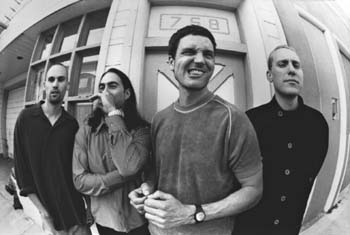 This op-ed from a Programming Boarder amused me. Trying to justify the execrable choice of Third Eye Blind to the campus, he blathers:
Our apologies if you’d love to see Dave Matthews come to Dartmouth, but chances are he’s not even considering the college scene, and if he were, he would charge a few hundred thousand, minimum... Prefer Weezer over Third Eye Blind? Sorry, Weezer isn’t touring right now... The University of Vermont is having Ok Go come for a concert; some people said they’d rather have them instead of Third Eye Blind. But Ok Go wasn’t available on May 6 — they were already booked at UMass-Amherst by the time we knew our schedule... PB doesn’t operate in a bubble. It’s our job to offer events that reflect the desires of the student body, and in this case, Dartmouth decided that they wanted Third Eye Blind, winning with 5646 points — 639 points ahead of the runner up, Hot Hot Heat. Dartmouth spoke and PB listened — so we booked Third Eye Blind.Dave Matthews, Weezer, OK Go, Hot Hot Heat. Geezus.
The problem isn't that Programming Board is restricted by the cost of bands or touring schedules or the Athletics Department hogging the facilities. It's that they have no fucking idea what a good musical act is, what's even remotely current, or how old their audience is.
In my time here, PB has brought us (as far as I can remember) O.A.R., Maroon 5, Dashboard Confessional, Vanessa Carlton, The Roots, Talib Kweli, and now Third Eye Blind. Talib was a good choice and The Roots an okay choice, but then again, PB probably was just like, "well, we need a black act... who's touring?" PB was saved by the simple fact that there aren't any black artists who are bad as the white artists PB picks. Seriously. Even Black-Eyed Peas (oh wait, didn't they play here too?) aren't anywhere near the level of complete intolerability that Vanessa Carlton reaches with every fucking song.
Programming Board's excuses fall apart when you consider the successes of FNR. I realize that the bands FNR selects (especially in the past year) don't appeal to much more than a smallish subset of campus. But the point is, they consistently book bands that make them fucking giddy with joy, they have a great fucking time doing it, and they manage to do it with Programming Board's money.
April 26, 2007
Dennis Kucinich
7:44 PM Kucinich, impoverished vegan, has had a gun in his household in his adult life?!
Liveblogging the Debate (i'm sitting right next to Niral)
7:22 - Hillary on the whims of a market economy: "I represent a big state with a lot of poor people."
7:24 - Chris Dodd: "There aren't qualified people running for public office."
Democratic primary voters: "who is Chris Dodd?"
BREAKING NEWS!
7:29 - Apparently someone named Mike Gravel is running for president....He's a former senator whose loud voice is matched only by his excessive gesticulation.
7:37 - Dodd "does not regret" his vote to confirm chief justice John Roberts, but rather, he's "disappointed" that a Republican nominee would vote against a woman's right to choose. Shocking!
7:41 - Richardson is the NRA's favorite Democrat. He's "a westerner," where the second amendment is "precious." He supports guns, but not those who use them irresponsibly (i.e. by murdering people).
7:51 - Gravel compares himself to a potted plant. He wilts in the shade and loves loud music.
7:52 - When asked about his biggest mistake, he Joe Biden responded, "overestimating this administration's confidence and underestimating its arrogance." With this, Biden shows that he's an able politician after all. I could have sworn he was going bring up the whole articulate black man fiasco.
7:57 - Someone named Augie in South Carolina asks Sen. Edwards a question via email. Edwards responds that his father worked in a mill.
8:01 - As indicated above, I'm sitting right next to Niral. We're going to get food. Hunger before politics. But as far as politics goes, it has got to be Obama.
Liveblogging the Debate
7:17 – Hillary responds by saying “I think Barack is absolutely right.” Barack, eh? She's hellbent on playing up her experience these days, I guess not acknowledging that Barack is her equal, a fellow Senator, she can pull the focus off the fact that her experience led to her to vote for the war?
7:28 - Kucinich is talking. The man can speak nothing but truth.
7:29 - "I am Mike Gravel. I am a crazy, crazy, old man. Nuclear Devices, NUCLEAR DEVICES!"
Actually, dude just called everyone out on their gradual withdrawal Iraq whatnot.
7:45 - Edwards calls out Brian Williams for not focusing on actual, substantive issues. When asked about health care, goes on to talk about how he's the only one with a plan, and how important plans are.
8:00 - I'm hungry and I've mostly stopped caring. Since nobody really pays attention to the actual issues anyway, I hope everyone's realized that, if they had to pick a face, a voice, and a demeanor to speak to them from the White House, it would be Obama.
8:19 - Scratch that. Kucinich and Gravel co-president charismatic powerteam. There's no losing.
Morgan
Its only fair that, since I got an introduction when I signed on here, Mr. Cohen gets one as well. Morgan is an '08, best described as a double major in Government, though he does dabble a bit in Film, among other disciplines. I highly recommend checking out some of Morgan's writing over at the DFP, especially his recent piece on The "New" SDS. Of course, you could just check out Facebook, but that would be far too easy.
 Morgan is known for his impassioned argumentation, and on a perhaps not completely unrelated note, a notorious incident in which a disgruntled neo-con threw a punch at him in the middle of class. Good times, those. So, welcome to our newest poster, Morgan.
 Morgan is known for his impassioned argumentation, and on a perhaps not completely unrelated note, a notorious incident in which a disgruntled neo-con threw a punch at him in the middle of class. Good times, those. So, welcome to our newest poster, Morgan.
McCain Calls for Gonzales to Resign
Mike Allen of The Politico reports that Republican presidential candidate John McCain has called on recently amnesiac Attorney General Alberto Gonzales to resign. “Out of loyalty to the president, he should obviously step down,” McCain said. “He’s not serving the president well. I reached that conclusion a long time ago. I just haven’t been asked.”
With a number of high profile Republicans lined up against Gonzales, his days appear numbered. The question is, will Bush continue to ignore political reality and stand by his old friend? Either way, it's win-win for the Democrats. If Bush stands his ground, he will be seen, once more, as privileging personal allegiance above - hmmm, what's the word I'm looking for here? - competence. If he bends to the rules of rationality (never really a safe bet with this man) and gives old Al the boot, the Democrats will have a nice long confirmation hearing with which they can berate the administration's justice dept. policies in front of an attentive national media.
With a number of high profile Republicans lined up against Gonzales, his days appear numbered. The question is, will Bush continue to ignore political reality and stand by his old friend? Either way, it's win-win for the Democrats. If Bush stands his ground, he will be seen, once more, as privileging personal allegiance above - hmmm, what's the word I'm looking for here? - competence. If he bends to the rules of rationality (never really a safe bet with this man) and gives old Al the boot, the Democrats will have a nice long confirmation hearing with which they can berate the administration's justice dept. policies in front of an attentive national media.
April 25, 2007
TheDartmouth.com Sucks
The new, flashier website was a bit nicer looking, but far less functional. Now it's apparently non-functioning. Also, whoever's responsible for this redesign fiasco apparently prefers British spelling. 
Anyone at The D want to shed some light on how this all went so horribly wrong?

Anyone at The D want to shed some light on how this all went so horribly wrong?
April 24, 2007
Sylvia Spears and Hiring at Dartmouth
Joe Malchow posted an intriguing (if also slightly self-important) report on the hiring of Sylvia Spears as the next head of the Office of Pluralism and Leadership yesterday.
Or rather, I should say the prospective hiring—Joe emphasizes that Dartmouth hasn't officially announced Spears as the new OPAL dean, rendering her status somewhat mysterious, or at least Joe thinks it does. I find Joe's speculations duplicitous—that Dartmouth is "squelch[ing]" reportage of her appointment because it a) is "embarrassed to have played into the hand of petition Trustee candidiate [sic] Stephen F. Smith, who has vigorously criticized the administration for allowing a swelling bureaucracy to grow arterial lines when it ought to be hiring more professors"; b) is "listening to its current employees, who are raising questions about the advisability of the new hire"; or c) is "holding the announcement in abeyance until the next instance of racial or cultural strife, to be released as a quick remedy." I think Joe has watched "Wag the Dog" a few too many times; the idea that the PR office is eagerly awaiting some racialized situation to announce a hiring is, well, the type of paranoid fantasy I've come to expect from Joe.
But I find the post duplicitous because, like most of Joe's writing about Dartmouth issues, it's pretty clear what Joe wants to say in his post, but he puts on a show of being the serious reporter and just delivering the facts, unsettling as they may be. What Joe really intends is that you come to the conclusion that Ms. Spears is unqualified for a superfluous position. I suppose he doesn't say so directly because innuendo is more effective in this type of thing than direct statement, but I don't feel as if the point is likely to be missed.
As I've said before, when conservatives start talking about there being too many deans, they mean, "why do we have diversity personnel?" But the interesting thing about this is that if you tend to believe that diversity deans are not worth much to the College, then someone whose credentials actually qualify them for the position are therefore unqualified for being hired. That is, Ms. Spears's career seems to have qualified her very well for a position like the OPAL dean, but that actually disqualifies her, in their eyes, from joining the Dartmouth administration.
Likewise, the fact that Ms. Spears is Native American is part of Joe's effort to discredit her—"the plain connection between her hire and last year’s unpleasantness, prompted by campus American Indians feeling unsupported by the administration and loudly communicating that view to the press and the ether around Dartmouth Hall. The message? Complaints bring about new employees." Again, what might be a qualification if you believe in the necessity of addressing minority issues—in this case, Native American issues—is turned into a reason why Ms. Spears doesn't deserve a job at Dartmouth. If you think the Native Americans' claims are illegitimate, then any person who might be qualified or well-positioned to address those claims is also made illegitimate. If you think this way, Ms. Spears's race is a good reason why she shouldn't be hired.
So it comes to this—if you think continuing to staff positions related to or in support of diversity on campus is a good idea, Joe has just given a few good reasons why Ms. Spears is a great hire. If, like most readers of Dartblog, you think diversity deans are superfluous and perhaps even evil, you'll understand that Ms. Spears should never be hired.
I don't like this type of argument—playing to one's readers' presuppositions and prejudices while pretending to argue to a different point or not to argue at all. But Joe goes beyond this dissembling bit of preterition; he also actively misleads.
Although the title of the post is "The New Woon," Joe repeatedly phrases things so it seems as if the College is adding a position to accommodate Ms. Spears and therefore is adding salary. "Complaints bring about new employees" suggests that the search that ended in offering Ms. Spears a job was brought about because of last fall's events. That's untrue. Tommy Lee Woon resigned, so someone needed to be hired to replace him. Joe also claims that, by hiring Spears, "Dartmouth has added $80,000 or more to its payroll when it could have added far less on the margin by simply promoting." I would be very surprised if Ms. Spears is being paid $80k more than Dartmouth was paying Woon. And as for promoting from within, unless Joe thinks that the promotee would be getting paid the same amount as she did in a lower position and not be replaced, I'm not sure how much money Dartmouth would really save by internal promotion. I could be wrong there, though—I'm not an econ major. Joe also refers to Dartmouth "grow[ing] arterial lines when it ought to be hiring more professors." Hiring someone to replace Woon is not administrative growth. Joe's efforts to associate Ms. Spears with administrative growth is misleading and disingenuous.
The Dartmouth-Harvard Relation: A Spatio-topical Analysis
Several days ago Jake Baron X put forward the following while engaging in a debate about class size, in response to an accusation of misusing statistics:
“If you don't have statistics to make a point, you have anecdotes. In other words, you have nothing at all. Any anecdote you can give Harvard can give better.”
To be honest I’m not sure this is true; if the Harvard students I know are any indication, they are by and large every bit as uninteresting as we are. However, the fact that Baron invokes the opposition at all is significant to me. I believe that if we take Jacob’s statement in conjunction with the recent alumni debate in the pages of the D (sadly offline due to the redesign) regarding Dartmouth’s ideological relationship to Harvard, we can begin to construct a modern history of the dichotomy along a freshman-alum axis.
It is important to note, however, that this dialogue itself represents just one segment of one of the humankind’s longest historical narratives, extant at least since the dawn of written communication. Consider (the presumably late) Professor H.H. Horne’s late-19th-century essay “Harvard and the Dartmouth Man:”
“If Harvard is the Athens of American institutions, Dartmouth is the Sparta. If idealism is the note of one, realism is the note of the other. Harvard is the haven of the true, Dartmouth is the haven of the useful. Harvard's is the gospel of Matthew Arnold; Dartmouth's of Carlyle…The one is the thoughtful observer of life, the other the vigorous liver of life.”
And so forth, for 1500 words. Clearly Prof. Horne felt compelled to situate the binary as in some sense dominating the entire history of intellectual development in the West. It is important to note here that Prof. Horne was almost assuredly not writing metaphorically. Ample archaeological and ethnological evidence suggests that Dartmouth and Harvard, thousands of years before their manifestations in the physical plane, gave rise to symbologies which are incalculably important to civilization.
Consider the following relief from Abydos, ca. 2600 BC:

Translated, the middle sentence reads, roughly,
“Yes, Kahotep got his acceptance tablet yesterday… He’s going to Dartmouth; of course he got in at Harvard too, you know, but we’re… just not sure how we feel about Boston.”
Most striking about the inscription in question is the fact that the icons representing the respective universities remain fully intact and recognizable thousands of years before the schools were even founded. We can therefore posit that the academic prestige of the institutions, far from being awarded from a somewhat arbitrary first-come-first-served sort of process, is actually so innate and essential to the universities that it predates them. To invoke one is to invoke the other, and together they mutually constitute the bedrock of human understanding and achievement. It is no coincidence that hieroglyphics, one of the earliest known forms of what can be formally designated as written language, is iconic in nature; before Dartmouth and Harvard were founded they did not have proper names, and as such had to be alluded to pictorially. In this way, the language of hieroglyphics was in some sense created in order to encode the concepts of Dartmouth and Harvard before they were even technically concepts.

In the fifth century BCE, Jewish mystics living in the shadow of Mt. Sinai began to adapt the still-nascent ideas of the Sefirot to spatially situate the Ivy League colleges, as well as (we assume) Stanford and MIT. Only four remain (Dartmouth, Harvard, Cornell, and Columbia); this could be for one of two reasons. Either the positions of the remaining four (and, it can be assumed, Stanford and MIT) have been lost to history, or the mystics never bothered, having already resolved the dilemma which had presumably led to the creation of the thing. Note that Dartmouth takes the place of Binah (the heart, the mother) while Harvard lies in Chokhma (wisdom, insight).
Thus Baron’s analysis represents a staggeringly important venture, critical to ancient and modern conceptions of the College and indeed reality. He is the latest in a long line of explorers, boldly investigating this profound, profound, profound issue.
Unrelated note: I don't think it's worth doing a whole point on Zeke Turner's thing today, but GOOD GOD.
April 23, 2007
Ivy Admissions: Same As It Ever Was
Today's American Prospect has a great piece deflating the recent glut of upper-middle class scare pieces on increasing selectivity in elite college admissions. Author Kevin Carey's point is that "[t]he declining odds of getting into an elite college are mostly a statistical mirage, caused by confusion between college applicants and college applications."
A little statistic data sheds a lot of light on the situation. Carey notes that, while the number of high school graduates have jumped by 8% in the past four years, so has the number of acceptance letters mailed out by "elite" colleges and universities. When discussing the ratio of acceptances to applications however, Carey's example is slightly less solid.
The number of Ivy acceptance letters mailed out has actually grown faster than the high school graduate population, however, and in the meantime, underqualified students are "treating the Harvard application like a Powerball ticket. An Ivy League education can be worth millions of dollars over a lifetime. To take a shot at one, all you need is $65.00 and a dream."
So really, things probably aren't getting much harder. Meanwhile, the publications marketing the annual panic piece to upper-middle class parents, the reputation-obsessed Ivy schools, and the cottage industry based around admissions seem to all be doing just fine.
A little statistic data sheds a lot of light on the situation. Carey notes that, while the number of high school graduates have jumped by 8% in the past four years, so has the number of acceptance letters mailed out by "elite" colleges and universities. When discussing the ratio of acceptances to applications however, Carey's example is slightly less solid.
"Imagine 20 students, each of whom applies to five schools and gets into two. Now imagine if the same students each applied to ten schools and got into two. The outcome for the students is the same: two acceptance letters. But the schools report lower admission rates, and the odds of admission seem worse."Though this an intentionally vague hypothetical, I think its a bit of an oversimplification. There is something tangibly different about only getting accepted to 20% of the schools one applies to versus 40%. Taking into account the relative differences in selectivity between colleges, in this new era of common-app fueled applications to 15 schools by each kid, who's to say which two colleges the kids get into. Perhaps a student who may have gotten into, lets say, John Hopkins University has now lost that slot to a student who was also accepted at Harvard, and has no intention of attending the former.
The number of Ivy acceptance letters mailed out has actually grown faster than the high school graduate population, however, and in the meantime, underqualified students are "treating the Harvard application like a Powerball ticket. An Ivy League education can be worth millions of dollars over a lifetime. To take a shot at one, all you need is $65.00 and a dream."
So really, things probably aren't getting much harder. Meanwhile, the publications marketing the annual panic piece to upper-middle class parents, the reputation-obsessed Ivy schools, and the cottage industry based around admissions seem to all be doing just fine.
April 20, 2007
Who the Fuck is Hank Paulson?
I realize it's an unforgiveable faux pas to speak poorly of the school during Dimensions, since a single derisive statement can convince a prospie that she actually might not prefer Dartmouth over Yale. But, considering the College's recent choice of Commencement Speaker, I feel like my hands are tied. You see, I don't actually believe in the oh-so-Ivy inferiority complex I like to joke about, but I'm a bit infuriated to see us play into it.
I guess this is all a really roundabout way to ask, "Is Hank Paulson really the best we can do? Really?" I imagine that nobody is surprised by the choice, but that everyone must be dissappointed. I mean, great, he's Sec. of the Treasury, and that's great for an alumni newsletter or a tour-guide name-dropping, but not for commencement. Why do feel obliged to get an alum? This is probably less interesting than the '05 choice of Immelt (at least GE was worth protesting). His career background - bumblefucking around as assistant deputy secretary of whatnot before some illustrious time at Goldman - its the kind of shit that I don't even find intriguing enough for a BG alumni mixer (had we successful alums, that is). He's impressive, but picking him for commencement is like screaming, "everybody look, we finally have a quasi-famous alum!" (Maybe if exercised a little restraint, people would be left to assume we've got a Senator or something out there).
Dartmouth has dropped the ball year after year in picking a commencement speaker (Paulson, Brokaw, Immelt, Mr. Rogers, some historian...) We'd all rather have an impressive and famous public figure rather than an accomplished alum, and we'd all prefer someone unique over someone trite (like Brokaw, who's kind of the village bicycle in commencement circles). Who the fuck is Hank Paulson? Where's our Jon Stewart, where's our Bill Clinton (christ, didn't we get him while he was President?), or a Kofi Annan or anyone who we might give a flying fuck about. What about a Sasha Cohen or a Seth MacFarlane?
Fuck it. It's not my commencement. I'm sure that, provided no alum gets appointed Undersecretary of Agriculture in the meantime, we'll do better next year.
April 19, 2007
Blogging Panel
I participated in this panel on blogging today. I was seated on the far left, a fact which I appreciated silently, and sat next to Joe Malchow. This is honestly not meant as an insult, but it occurred to me that, next to one another--he in a jacket and rather fine tie, I in some bland polo and jeans—we must have looked something like those "Apple v. PC" commercials. I'm kind of disturbed that I just compared myself to Justin Long, but I suppose I'll get over it.
The panel was quite interesting to me—it drove home the point that blogs truly do serve a variety of functions, even if certain motivations are common to all bloggers, and certain principles hold at all levels. I left not feeling particularly bullish about the blogosphere—Brendan Nyhan's point that the panel was pretty much made up of the same kind of people who have been providing opinions to the public for decades, if not centuries—lawyers, academics, writers—was well-taken and somewhat dispiriting.
I feel pretty much the same, though. I think bloggers are, for the most part, people who would have pursued some form of verbal self-expression and, in a different time, would have conformed and submitted themselves to editing in order to conduct that pursuit, but who now realize that they don't have to. I know Malchow used to work with The Beacon; I write for the DFP. On a national level, Andrew Sullivan has a journalistic background, as does Josh Marshall, and Arianna Huffington; Michelle Malkin pretends to write. The PowerLine trio (I can't say that without thinking of the supergroup Power Station, which comprised Robert Palmer and some of Duran Duran), Ann Althouse, Hugh Hewitt, John Aravosis, and Glenn Reynolds are all lawyers/law professors (and God knows lawyers are big on self-expression).
More: Professor Samwick made the best point of the whole event, but I wasn't sure how to express it succinctly, so I left it out of my recap. He posted over at his blog about it, however, and it's definitely well worth reading.
 I'm kind of disturbed that I just compared myself to Justin Long, but I suppose I'll get over it.
The panel was quite interesting to me—it drove home the point that blogs truly do serve a variety of functions, even if certain motivations are common to all bloggers, and certain principles hold at all levels. I left not feeling particularly bullish about the blogosphere—Brendan Nyhan's point that the panel was pretty much made up of the same kind of people who have been providing opinions to the public for decades, if not centuries—lawyers, academics, writers—was well-taken and somewhat dispiriting.
I feel pretty much the same, though. I think bloggers are, for the most part, people who would have pursued some form of verbal self-expression and, in a different time, would have conformed and submitted themselves to editing in order to conduct that pursuit, but who now realize that they don't have to. I know Malchow used to work with The Beacon; I write for the DFP. On a national level, Andrew Sullivan has a journalistic background, as does Josh Marshall, and Arianna Huffington; Michelle Malkin pretends to write. The PowerLine trio (I can't say that without thinking of the supergroup Power Station, which comprised Robert Palmer and some of Duran Duran), Ann Althouse, Hugh Hewitt, John Aravosis, and Glenn Reynolds are all lawyers/law professors (and God knows lawyers are big on self-expression).
More: Professor Samwick made the best point of the whole event, but I wasn't sure how to express it succinctly, so I left it out of my recap. He posted over at his blog about it, however, and it's definitely well worth reading.
April 16, 2007
Virginia Tech Shooting
Though details are still uncertain, it is becoming clear that an immense and surreal tragedy has taken place at Virginia Tech. The police chief is reporting 22 dead, and Virginia Governor Tim Kaine's office is reporting 32 dead after a shooting rampage that seems to have stretched over two hours of the early morning. The incident began with a 911 call from a freshmen dormitory around 7am, and concluded two hours later when the gunman resurfaced at a science building across campus, apparently taking his own life as well.

From Sigma Delt: "For those who haven't heard, there was a shooting today at Virginia Tech. A Vigil will be held tonight on Collis Porch at 8pm. Please join us."

From Sigma Delt: "For those who haven't heard, there was a shooting today at Virginia Tech. A Vigil will be held tonight on Collis Porch at 8pm. Please join us."
Intellectual Humility v. Large Classes
A question struck me upon reading Jacob Baron's column, titled "Large Classes, Misplaced Priorities", in today's D: what does he think he's doing here any way?
No, I'm not just being glib—it is apparent that the logic which drives a lot of students' complaints about large classes is that students are in classes to contribute, and not to learn. Thus, the need for more small classes, where contribution is expected (though rarely universal), and fewer large ones, where a student's contribution is largely a matter of attendance. Memorization of facts, dates, and names seems antiquated; discussion, dialogue, interaction—that's where the action is—that's how you really get an education these days.
I know the old phrase that goes something like "if you want to learn something, teach it," but I fail to see how that translates to "if you want to know something, give your strong but not necessarily well-informed opinion about it." Participating in a discussion is not teaching, and I think a lot of students (maybe even me) frequently fail to recognize the difference.
I'm not saying that small, discussion-based classes aren't helpful for learning, but a lot of students I've run into think that discussion is the point of these classes (some profs may think this too). Call me old-fashioned, but I still think the point of discussion-based classes is learning—facts, concepts, argumentative strategies at the very least—and I don't think that goes on for a lot of people. I think a lot of "discussion" is just extemporaneous speaking.
To put it a different way, Dartmouth students have, for the most part, no intellectual humility. I don't think they ever pause to consider how smart the author of the novel they're reading is, or how much more information the sociologist who wrote their textbook has combed through to come to her conclusions. There is no sense of the scale of intellectual achievement at Dartmouth—a poem by Keats is just raw material for one's next paper. Theories are not accomplishments—they're merely discussion topics.
I'm sorry for the rant, but I've gotten bitter in my old age. Unlike so many here at Dartmouth, I'm no longer young enough to know everything.
(This post was inspired, in part, by this annoying freshman.)
April 12, 2007
Smurf Alert: Malchow Defends Racist
 I'm sure he's just doing this for attention, but Malchow has spent two posts defending Don Imus for his "nappy headed 'hos" comment (here and here). In the first post, despite having previously stated that he "must glance at more than one thousand news items a day, poring over a hundred or so to analyze for bloggability. To make the job easier—and so I never am reduced to staring at the raw wire—a series of filters and news alerts ding me when an item likely to be of interest moves—that’s the word the news folks use, moves—across the wire," Joe archly feints at total ignorance of the Imus comment.
I heard he said something, Imus did. About farming implements. Or basketball. But no one has told me what he said. But gosh, it sure must have been something. Keep hearing about it. Does anyone know what he said? I would like to hear it myself. I reckon it was something special, what Imus said. Fella doesn’t talk much.Haha, Joe, I get it—you think it's a tempest in a teacup.
But then Joe drops his "out of the loop" charade to defend Imus directly in his typically geriatrophilic pedant manner:
Would you happen to have the time? Half past four? Oh, jolly good, thanks. My goodness, Margaret, what nappy-headed hos they have here in America. Would that Britons were a bit kinder.Joe, as an instruction to you, let me consult a better, more up-to-date dictionary for the definition of 'ho: The Urban Dictionary. Rather than putting definitions before the readers of this blog which they already know, I've just linked the damn entry. You can peruse it at your leisure. Let me also point you to this page, which collects some of Imus's other racist quips.Point is that ‘ho’ may just as well have meant ‘very polite person.’ The earliest use that the researchers at the Oxford English Dictionary can find for ‘ho’—the word used by soon-to-be-former radio personality Donald Imus in reference to the utterly fantastic Rutgers girls basketball team—is from 1992. (Which is not enough, by the bye, even to make it a word.) The 1992 usage comes from the lovely tune Treat Her Like Prostitute, which goes: “Now your girl she don’t like to have sex a lot And today she’s ready and she’s hot hot hot… Next thing you know the ho starts to ill She says, ‘I love you, Harold’ and your name is Will.”
And they say romance is lost. To recapitulate, we’ve learned that a word was invented just ten years ago by a crew of rappers. The word was formulated precisely to have a hint of disparagement, and yet to remain a common term of reference for any woman. (This is the first definition noted by Oxford, and the one Imus used: “Sometimes with weakened force,” the OED says, ‘ho’ means “a woman.”)
And that use of the word has indeed persisted. It is used daily by Americans of a certain generation, and with saturation by rap and hip-hop artists. An aging radio personality awoke from his nap long enough to brush up on this new lexicon, and repeated it on the air that he might be current-sounding. For that, he was taken to the professional expurgators.
But while I was on Urban Dictionary, inspiration struck, and I looked up your name. It seems that someone has seen fit to define "malchow" as "An extremely repulsive human being..." The word was added in March, 2004, which was before you got to Dartmouth, so I don't think you can blame Connor or me for it.
Sounds like your path of irritation has spread back some ways. And you didn't even have a blog then.
Edit: Joe substantially changed the post, in case you're wondering why the text I excerpted doesn't match up perfectly with the post as it now stands.
Subscribe to:
Posts (Atom)