Showing posts with label Movies. Show all posts

March 11, 2011

#13: Seven Samurai (1954) conquers the West of the Far East

(Part of my series on watching every movie in the IMDB's top 250)

What do The Dirty Dozen, X-Men, The Sandlot, The Oceans 11(+ n) Series, and pretty much every heist movie have in common? They all owe their plot lineage to Seven Samurai.

Seven Samurai follows the plight of a farming village in Japan just after the Ashikaga shogunate of the 1500s, and their quest to enlist the support of Seven ronin samurai to help defend themselves against gangs of raiding marauders. What follows is a simple three-act set-up -- the conflict and recruiting, the development and cohesion, and the mission and farewell-- that has come to define such movies made subsequently. As in the modern movies mentioned above, each character is brought into the group because of the unique contributions that he can bring to the mission. The themes of honorable 'hired guns' coming to rescue innocents (especially helpless, undeveloped sexy female characters) from violent lawlessness are all common to American Westerns and therefore will be familiar to modern audiences. However, given the timeframe that the movie was made, it is clear that these themes are meant to send a political message against the samurai-inspired militarist ideals exhibited by Japan in WWII.

February 1, 2011

#92: The Apartment (1960)

(Part of my series on watching every movie in the IMDB's top 250). Think of it as a 22-year-old's analysis of classic American cinema.

Some movies age well. The Apartment did not. There is really nothing in the movie (using your flat as a shag-pad for your co-workers, blatantly porking your secretaries, open nepotism, sexism, smoking constantly, drinking early) that would be acceptable at a major corporation today. But more importantly the premise is not very believable and the romance of the movie is almost completely confined to a game of cards. The plot centers around a love triangle that is basically awkward and the ending was glued on with little regard for the plot's concluding acts.

January 31, 2011

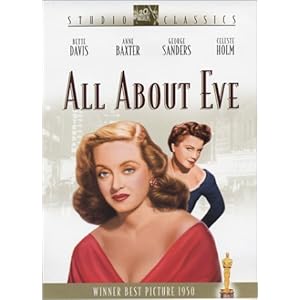
#84: All About Eve (1950)

(Part of my series on watching every movie in the IMDB's top 250)

All About Eve is easily the cleverest movie I've ever seen, dialogue-wise. Despite the fact that I was watching it with company, on more than one occasion I rewound the movie just so that I could appreciate all the nuances of particularly well-crafted line.

All About Eve is also one of the few movies where every single premise is believable. It tells the story of a freshly 40-year-old stage actress who grows anxious that she's getting too old to play 20-somethings characters like she used to, and grows increasingly paranoid that the raving (and very attractive) 20-something-year-old fan that she just hired as a valet will be the one to take her spot. It's a story that very closely mirrors the actual lives of the actors in the movie, making their portrayal so much more convincing. In a way it's like a really well written reality show-- to the point that you may forget you're watching a movie at all.

January 30, 2011

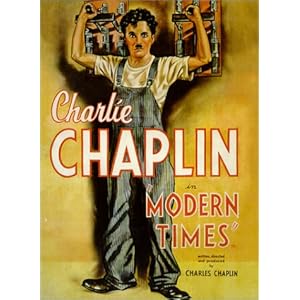
#69: Modern Times

(Part of my series on watching every movie of the IMDB's top 250)

I had always been shown clips of Modern Times in high school as artistic examples of the feeling of dehumanization that modernization and mechanization created at the start of the last century. I was please to discover that Modern Times is so much more than that and is, in fact a rather cute and very enjoyable movie. While much of the comedy is in Charlie Chaplin's famous slap-stick style, it's actually rather clever and unpredictable in ways that make it mature and laugh-out-loud funny even today. The satire is there, but it's really much more pantomime, though Chaplin never gets tiring or awkward. As someone who grew up on Cartoon Network, I can see the artistic and comedic influence of Modern Time throughout decades of subsequent cartoons and today appreciate it as a very fine movie.

January 29, 2011

#29. It's a Wonderful Life (1946)

(Part of my series on watching every movie of the IMDB's top 250) Every family has a movie they traditionally watch on Christmas. For some families that movie is A Christmas Story or one of the many versions of Dickens's A Christmas Carol. In my family -- we being Italian -- that movie was, of course, The Godfather. And so it wasn't until now that I finally watched this most celebrated of Christmasy movies, It's a Wonderful Life.

In no other movie have I seen such an idealistic portrayal of American civilization throughout the many phases of the early twentieth century. Nor have there been many characters quite as sympathetic and American as the ones played by Jimmy Stewart. In this movie, it's somewhat difficult to pull off given the fact that the 'aww shucks' character of George Bailey (played by Stewart) is a tragic one. He lives exactly the opposite life he wanted for himself in order to satisfy the needs and desires of those around him. He instantly and methodically does what is right, at high cost to himself. And in doing so, grows resentful of a business, community, and family that does not seem to appreciate the sacrifices he has made, and he grows jealous of those who enjoy success in everything he's wanted to do.

Tackling IMDB's Top 250 Movies

Finding every blockbuster around me in New York closed, I stopped by my local public library and found exactly where all those old DVDs went. Rows and rows, and drawers and drawers of free DVDs all at my disposal -- 100 items at a time, for 7-day rentals each -- presented too great an opportunity for me to pass up. I knew exactly where to start. Out came the blackberry, IMDB's list top-250 movies, and my eye at the top. This was to become my mission: to see them all. And not the old lady, blocking the 'S' shelf as she slowly reads each movie back, or the family man with the shopping card full of Dora the Explorer DVDs will stop me!

After printing out the full list at home, I found that of the 250 titles, I had already viewed 98 of them. Not quite a failing grade on the cinematic literacy test, but certainly not enough to win me prizes on Jeopardy either. But with the simple dedication to view one movie a day for the next 152 days, I can finish my task by June 20th of this year.

While this means that I'll finally get around to viewing classics -- the kind that make friends and parents alike recoil in disgust when they learn I haven't seem them -- it also means viewing a considerable number made pre-color and pre-sound. In my experience, these 'ancestor' movies continue to receive high ratings, not based on the pleasurably of viewing them today, but rather based on the reactions they generated in their own time, and their influence on the great movies of the contemporary cinematic age. Will The Apartment be as good as its inspired descendant American Beauty? Will The Great Dictator still be relevant satire some 70 years after Hitler? Time and three tons of popcorn will tell.

August 18, 2010

REVIEW: Scott Pilgrim's video-game romance not steamy but visually amazing

Scott Pilgrim looks the way that would feel.

Shot like the comic books from whence the movie drew its inspiration, Scott Pilgrim v. the World is the first major-motion ‘expressionist’ movie I’ve ever seen. Dazzling colors, awesome mortal-combat-esque fight scenes, hilarious absurdist comedy, rockin' alternative music, and polite Canadians pepper the screen making it an incredible and impressive watch.

I normally don’t care for Michael Cera and don’t consider him a serious actor. He just plays his awkward self in every movie... they probably don’t even tell him that the cameras are rolling. I went into the theater fearful that Cera would screw this movie up. Thankfully, the supporting cast draws a lot of attention away from this main protagonist (Thanks Jason Schwartzman! P.S.: Pilgrim’s gay roommate is priceless) and the role was properly designed for Cera to fill.

July 19, 2010

REVIEW: Inception

Many newspapers reviewers have said that Christopher Nolan's Inception is too "complicated" when in reality, it is just complicated enough. Movies today, it seems, cater to the absolute lowest common intellectual denominator with nothing but cute animals, tired jokes, and fluffy plots. When Academy Award-Winning actress Penélope Cruz's most commercially successful movie is G-Force, a movie about secret agent guinea pigs, something is wrong with the world. The success of Inception just might make it right again.

If you've read my past reviews, you'll know that I place a strong emphasis on the plots of movies. What are movies but stories? -- stories that allow us to explore areas connected to, but just beyond, the human experience? That's why I loved Inception.

The story centers around Cobb, an "extraction" specialist, who uses a Matrix-like artificial reality network machine to infiltrate people's dreams and steal their deepest, most profitable secrets. In his crew are an architect who designs the 'levels' where the dreams take place, an impersonation expert who acts out characters int he dream, a chemist who develops drugs to sedate his targets, and various other dream-bandits. Cobb's greatest challenge, and the movie's focus, comes when a businessman offers to clear Cobb's troubled background in exchange for planting an advantageous idea in the businessman's rival's head.

April 9, 2010

REVIEW: How to Train Your Dragon

What do you get when you combine animated Vikings, dragons, aerial battles, and just enough age-appropriate romance? Answer: How to Train Your Dragon, a film that is charming, touching, and certainly not just for kids (in fact, it's rather violent, if not explicitly so).

The movie (based on the book), follows Hiccup, the unbrawney son of a tribal leader in a mythical viking village. Because he fails to meet the usual viking standards of success (e.g. gigantic pecs and blood thirsty courage), Hiccup is marginalized, yet resolute on winning the community's acceptance by participating in its most honored past-time: fighting dragons. With a keen interest in design, be builds a bolas-launcher and captures a dragon, keeping it in secret and discovering that almost everything the Vikings know about dragons is wrong.

HtTYD is a major success for DreamWorks Animation, a company that is consistently dominated by Pixar and has failed to produce much of value beyond the Shrek dynasty. Getting away from its usual light, childish, and cuddly-animal-filled movies, HtTYD demonstrates DreamWork's ability to tackle human emotions and bring human characters to life on screen. The part that I found most enjoyable about the film was the simple exploration of the Viking world as we follow Hiccup's discoveries. At times it reminded me of Avatar, but was much more effortless in the execution.

The three minor shortcomings of the film I found were a lack of comedy (save perhaps for the helmet scene), odd visual angles at times, and bits of flat dialogue (e.g. "You just gestured to all of me"). HtTYD easily makes up for these and more in its potent and non-preachy handling of big issues like ignorance, curiosity, acceptance, and disability -- the last one's treatment turning HtTYD from a simply good movie to a great one.

See it
Rent it
Skip it

March 31, 2010

REVIEW: The Ghost Writer

The Ghost Writer has everything: mystery, power, secrecy, seduction, and two very sexy leading men. Everything, it seems, except for a reason why all these things appear on the screen.

The movie follows a young author, hired to replace the recently (and mysteriously) deceased ghost writer for ex-British Prime Minister (and obvious Tony Blair knock-off) Adam Lang. Lang's memoirs promise to be both dynamite on the best sellers' list (a la Harry Potter) and on the world political map, but there is still an odd bit of secrecy surrounding the book's final touch-up and the cast of characters sequesters itself at Lang's isolated beach house on Martha's vineyard.

In spite of rather stellar casting, direction, and dialogue, the fatal flaw in The Ghost Writer is the complete lack of an impactful plot to drive the story or make sense of what we subsequently see on screen. We hear allegations against Lang in the International Criminal Court that are more remarkable for how minor, indirect, and common they are. We see allegations of connections between Lang's family and foreign intelligence services, but are left asking the question, so what? The writer keeps acting like 'the man who knew too much', when in actuality he knows nothing (even at the very end!) and for that reason, the film falls apart.

While cinematically it is a good film, it is certainly not Polanski's best, and maybe if Polanski hadn't been arrested, it would have been worth seeing.

See it
Rent it
Skip it

December 14, 2009

Food, Inc.

Food, Inc. is an eye-opening movie.

Don't get me wrong, I was well-aware that companies in America are always out to make a profit, but the manner in which some companies seek profits is disgusting.

For example, Smithfield, a company which produces vast amounts of poultry, knowingly hires illegal workers for their factories in Tar Heel, North Carolina. Illegal? Yes, but Smithfield has come to an agreement with the government that they will give the government some of the names of the illegal immigrants periodically if they are allowed to continue this practice.

What's scarier about this situation? The fact that companies are 'giving up' their workers (who although illegal, are still responsible for helping produce the goods) or the fact that the government knowingly allows companies to function like this?

The movie brings to light the way that chickens and pigs are kept before slaughter. Chickens are kept in small, cramped, and often dark rooms, where there is little space and unsanitary conditions. Chickens are meant to grow to full maturity in about three months-- thanks to new methods of production, chickens can grow in half the time. This often means that the chickens are unable to walk more than two steps because their organs grow much faster than the rest of their bodies.

Pigs are kept in similar conditions-- small, cramped rooms; and little concern for their comfort. Why? Because food production companies consider pigs 'temporary' visitors.

Although the meat industry is particularly disgusting, vegetarians don't have it easy either.

Consider the fact that over 90 percent of food products contain corn. Why? Because the corn industry is relatively huge in the United States. In fact, approximately 30 percent of land in the U.S. is set aside for corn production.

After watching the movie, I think that I was most shocked by the amount of power that food companies have. The government, scared to control companies, chooses to support them, rather than us.

Words of advice from the moviemakers:
1. Eat organic.
2. Try to eat together as a family.
3. But healthy products-- our demand for better products informs businesses that we want better quality.

Watch what you eat, because the food companies do NOT have your interests at heart.

Bruschi adds: Also look up my review.